Cel Animation Art
Krazy Kat & Ignatz Mouse, Zip! Pow!
George J. Herriman, 1927–1929
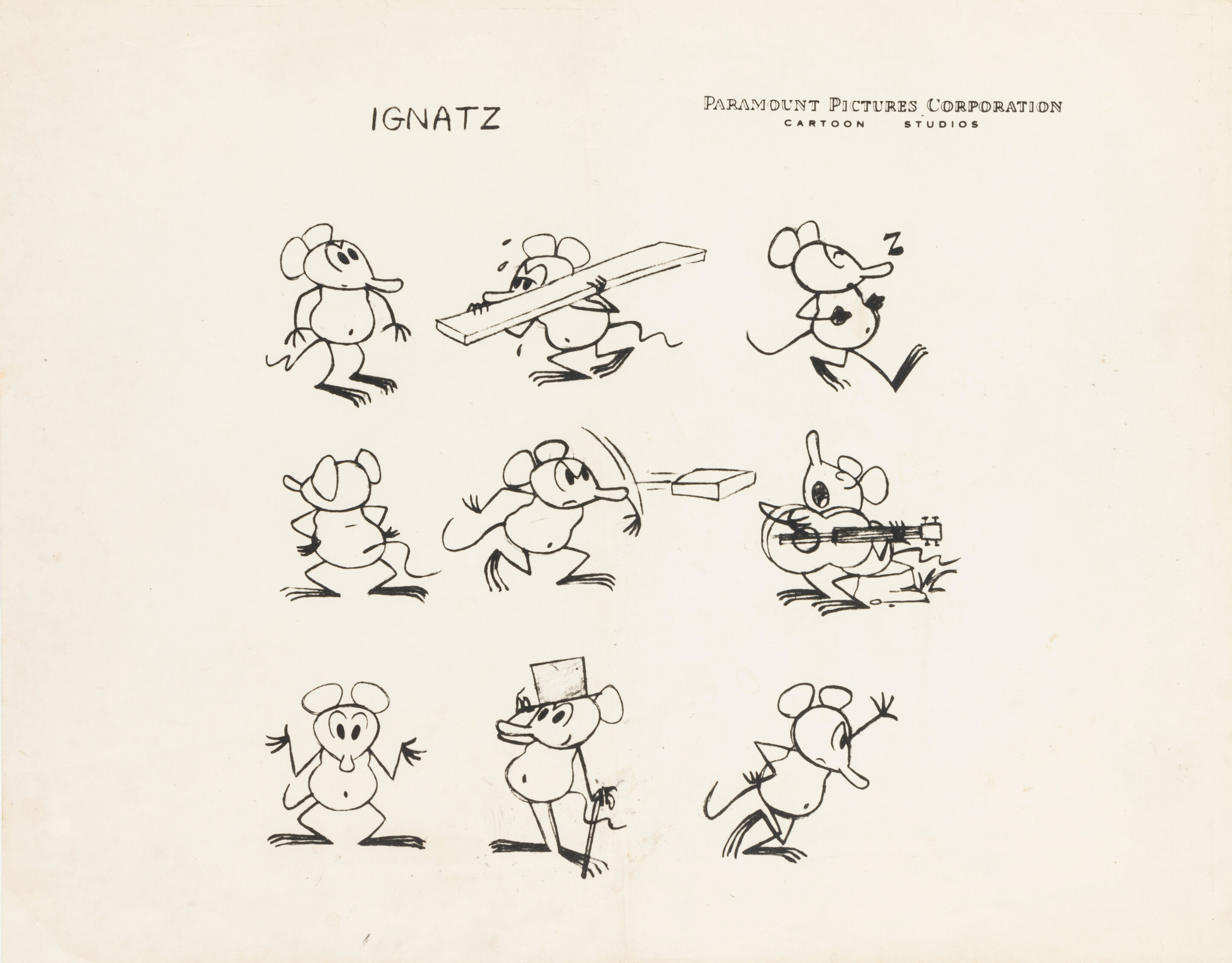
Krazy Kat & Ignatz Mouse – Ignatz photostat model sheet (Paramount Pictures Corporation Cartoon Studios, c. 1927–1929). Studio animation photostat showing Ignatz Mouse in nine poses used as character‑reference art for Famous Studios’ Krazy Kat & Ignatz Mouse shorts.
- Medium
- Photostat Model Sheet
- Dimensions
- 14" x 11"
- Status
- In Collection
Curatorial record
About this work
This photostat model sheet for Ignatz Mouse, produced by Famous Studios for Paramount Pictures Corporation Cartoon Studios between roughly 1927 and 1929, preserves a rare piece of studio reference material from the animated adaptations of George Herriman’s Krazy Kat & Ignatz Mouse. The sheet presents Ignatz in nine distinct poses, capturing a full range of attitudes and gestures—including one with his trademark concealed brick—that animators used to maintain consistency in design, expression, and personality across short subjects. As a model sheet, it functioned as a working tool in the animation pipeline, bridging Herriman’s newspaper strip with its screen incarnations by translating the character’s comedic vocabulary into reproducible motion and staging.
Recent biographical research has foregrounded Herriman’s New Orleans birth record, which recorded him as “colored,” and many historians now argue for his recognition as one of the earliest and most important Black newspaper cartoonists in the United States. In that light, the Krazy Kat & Ignatz Mouse animated shorts—and studio artifacts like this model sheet—carry added significance: they document how a creator now understood as a pioneering Black cartoonist helped shape the visual language of American comics and animation decades before later generations of Black artists were widely credited. Measuring 14" x 11" and showing a vertical crease and light handling wear, the sheet retains the physical traces of its use while remaining highly legible and displayable. Within The Askia Jones Collection, it anchors an early chapter in the narrative of Black authorship and innovation in popular media, connecting newspaper strip history, theatrical animation, and the long arc of representation that runs through the rest of the archive.